👥 Body Doubling + ADHD Timer: Ultimate Focus Combo
The Perfect ADHD Productivity Match: Body doubling provides the social accountability your ADHD brain craves, while timers provide the structure and boundaries you need. Together, they create the ultimate focus environment for neurodivergent minds.
🤝 What is Body Doubling for ADHD?
Body doubling is working alongside another person (in person or virtually) to increase focus and accountability. For ADHD brains, having someone else present – even if they're working on completely different tasks – can dramatically improve concentration and task initiation.
🧠 Why Body Doubling Works for ADHD
ADHD brains benefit from body doubling because it addresses several core challenges:
- External Accountability: Someone else is witnessing your work effort
- Social Mirroring: You naturally match the focus energy of others
- Dopamine Boost: Social connection provides neurochemical motivation
- Task Initiation Support: Having someone else start makes it easier for you to begin
- Reduced Isolation: Combat the loneliness that can worsen ADHD symptoms
- Gentle Pressure: Mild social pressure to stay on task without judgment
As an Amazon Associate, we earn from qualifying purchases. Product picks are researched suggestions, not medical or professional advice.
Body Doubling Session Essentials
- Time Timer MOD - Visual Timer Sync your focus blocks with your body double partner visually
- Sony WH-1000XM5 Noise-Canceling Headphones Perfect for virtual body doubling - clear audio without distractions
- HidrateSpark Smart Water Bottle Stay hydrated during long focus sessions - glows to remind you to drink
⏰ Why Add Timers to Body Doubling?
While body doubling provides social accountability, timers add the structure and boundaries that ADHD brains need for optimal productivity:
🎯 The Timer Advantage in Body Doubling
- Synchronized Sessions: Everyone works for the same focused period
- Natural Break Points: Built-in pause times prevent burnout
- Hyperfocus Protection: Prevents 4-hour work marathons
- Transition Management: Clear start and stop signals
- Energy Regulation: Balanced work and rest cycles
- Time Awareness: Combat ADHD time blindness
⚡ The Magic Formula
Body Doubling + Timer Structure = Perfect ADHD Focus Environment
- Social accountability + Time boundaries
- Motivation boost + Energy management
- Reduced isolation + Structured productivity
- Gentle pressure + Clear expectations
🎬 Setting Up Your Body Doubling Timer Session
Here's how to create the perfect ADHD-friendly body doubling environment with timer integration:
👥 Choosing Your Body Double
🔍 Ideal Body Double Qualities
- Understanding of ADHD: Gets why you need timers and breaks
- Similar Work Style: Prefers focused, quiet work periods
- Reliable Schedule: Can commit to regular sessions
- Non-Judgmental: Won't criticize your ADHD quirks
- Timer-Friendly: Willing to work with structured time blocks
- Minimal Chatter: Comfortable with quiet, parallel work
⚙️ Essential Setup Elements
🎯 Perfect Body Doubling Timer Setup
💻 Virtual Body Doubling Platforms for ADHD
Can't find someone in person? Virtual body doubling is just as effective and often more convenient:
🎥 Video Call Platforms
- Zoom/Teams: Screen sharing for timer sync
- Google Meet: Simple, reliable connection
- FaceTime: Easy for Apple users
- Discord: Great for regular groups
🎯 Specialized Body Doubling Apps
- Focusmate: 50-minute structured sessions
- Flow Club: ADHD-friendly community
- Caveday: Group productivity sessions
- Study Together: Virtual study rooms
🌐 Free Community Options
- ADHD Facebook Groups: Body doubling threads
- Reddit r/ADHDers: Virtual coworking posts
- Discord Servers: ADHD-focused study rooms
- Local Meetups: In-person ADHD groups
🔄 Timer Strategies for Different Body Doubling Scenarios
👤 1-on-1 Body Doubling Timer Protocol
🎯 Perfect for: Close friends, partners, regular work buddies
- Flexible Timing: Adjust session length based on energy
- Custom Breaks: Longer check-ins and social time
- Task Coordination: Can align complementary work
- Accountability Depth: Detailed progress sharing
- Timer Synchronization: Start/stop together for maximum effect
👥 Group Body Doubling Timer Management
🎯 Perfect for: Study groups, coworking sessions, ADHD meetups
- Standardized Timing: 25 or 45-minute blocks work best
- Minimal Check-ins: Brief progress sharing
- Silent Work Periods: Cameras on, mics off
- Group Timer Display: Shared screen with countdown
- Staggered Breaks: Not everyone needs to break together
🌙 Asynchronous Body Doubling
🎯 Perfect for: Different time zones, varying schedules
- Timer Accountability: Share completed session screenshots
- Check-in Messages: Before/after work updates
- Parallel Timing: Work same time blocks in different locations
- Progress Sharing: Daily or weekly timer session reports
- Virtual Presence: Knowing someone else is also working
🎯 Body Doubling Timer Techniques for Specific ADHD Challenges
⚡ For Hyperfocus Management
The Problem: You start working together but hyperfocus takes over and you work for 6 hours straight.
✅ Timer Solutions
- Maximum Session Alert: 90-minute hard stop timer
- Body Double Check-ins: Partner reminds you to break
- Health Timer: 45-minute water/movement reminders
- Energy Assessment: Rate fatigue level each break
- External Accountability: Partner enforces break times
🐌 For Task Initiation Paralysis
The Problem: You both sit there staring at your work, unable to start.
✅ Timer Solutions
- 2-Minute Start Timer: Commit to working for just 2 minutes
- Parallel Starting: Count down 3-2-1 and start together
- Micro-Task Timers: 5-minute tiny task completion
- Prep Time Timer: 10 minutes to set up workspace
- Motivation Check-in: Share what you're excited about
🌪️ For Distractibility
The Problem: You keep wanting to chat or getting distracted by each other.
✅ Timer Solutions
- Silent Work Periods: No talking during timed blocks
- Distraction Log Timer: Note interruptions to discuss later
- Focus Reminder Alerts: Gentle visual cues to refocus
- Social Time Allocation: Dedicated chat time during breaks
- Accountability Questions: "Are we both still focused?"
📱 Technology Setup for Body Doubling Timer Success
🖥️ Screen Setup Recommendations
- Dual Monitor Setup: Work on one screen, body double on second
- Picture-in-Picture: Small video window with timer overlay
- Phone for Timer: Separate device so timer stays visible
- Shared Timer Screen: One person screen-shares countdown
- Synchronized Apps: Both use same timer app
🔊 Audio Management
- Headphone Protocol: When to mute/unmute
- Timer Alert Sounds: Coordinate notification timing
- Background Music: Shared playlists for focus
- Silent Signals: Visual cues for communication
- Break Chimes: Gentle alerts both can hear
🚫 Common Body Doubling Timer Mistakes (And Fixes)
❌ Mistake 1: Too Much Social Time
Problem: Sessions become chat time instead of work time
Fix: Use timer structure to limit social interaction to breaks only
❌ Mistake 2: Mismatched Energy Levels
Problem: One person is tired while the other is energetic
Fix: Allow different timer lengths and flexible break timing
❌ Mistake 3: Over-Committing to Sessions
Problem: Scheduling 4-hour body doubling marathons
Fix: Start with 1-2 hour sessions with timer breaks
❌ Mistake 4: Technology Overwhelm
Problem: Too many apps, screens, and timers to manage
Fix: Keep setup simple - one video call, one shared timer
📊 Measuring Your Body Doubling Timer Success
Track these metrics to optimize your body doubling timer system:
📈 Productivity Metrics
- Session Completion Rate: How often you finish planned work blocks
- Focus Quality: Rate your concentration 1-10 each session
- Task Completion: Projects finished vs. started alone
- Consistency: Regular session attendance and timing
🧠 Wellbeing Indicators
- Isolation Reduction: Feeling more connected and motivated
- Stress Levels: Lower anxiety about work and deadlines
- Confidence: Improved self-efficacy with challenging tasks
- Energy Management: Better balance of work and rest
🎯 Your Body Doubling Timer Action Plan
Ready to combine these powerful ADHD strategies? Follow this implementation guide:
📅 Week 1: Foundation Setup
- Find one reliable body doubling partner or platform
- Test technology setup and timer synchronization
- Complete 3 sessions using 25-minute work blocks
- Establish basic communication and break protocols
📅 Week 2: Structure Refinement
- Experiment with different timer lengths (25, 45, 60 minutes)
- Add hyperfocus protection and health reminder timers
- Establish consistent session times and duration
- Create accountability check-in questions
📅 Week 3: Challenge Integration
- Apply body doubling timers to your most difficult tasks
- Add multiple body doubling partners or group sessions
- Use technique for task initiation and hyperfocus management
- Track productivity and wellbeing improvements
📅 Week 4: System Optimization
- Analyze what timer lengths and formats work best
- Build sustainable long-term body doubling relationships
- Share your success strategies with ADHD community
- Plan expanded use for major projects and goals
Start Your Ultimate ADHD Focus Journey
Combine the power of social accountability with structured timer productivity. Transform your ADHD focus today.
👥 Start Body Doubling Timer Sessions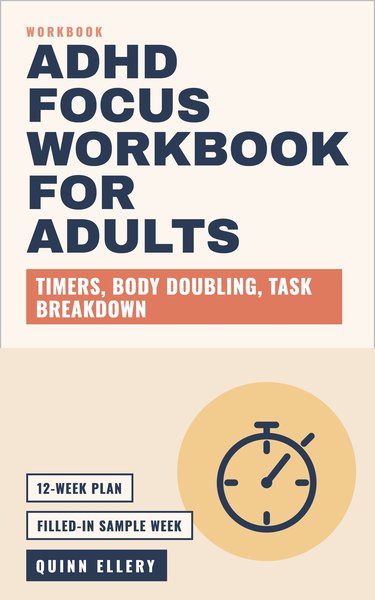
The companion workbook
ADHD Focus Workbook for Adults
by Quinn Ellery
A fill-in workbook built around the tools on this site: Pomodoro timer variants, body doubling, task breakdown into next physical actions, and time blindness tools that work with your brain, plus 12 weeks of undated focus planning pages.
Paperback on Amazon🔗 Complete Your ADHD Productivity Arsenal
Master every aspect of ADHD focus and productivity:
- Body Doubling Groups for ADHD: Complete Directory 2026
- Free ADHD Timer Online: Why 25 Minutes is Perfect for ADHD Brains
- Visual Timer for ADHD: Science-Backed Focus Techniques
- ADHD Time Blindness: How Timers Save Your Productivity
- Managing ADHD Hyperfocus: When to Use Timers vs. Let It Flow
- ADHD Medication and Productivity: Optimizing Your Focus Window