⚡ Managing ADHD Hyperfocus: When to Use Timers vs. Let It Flow
The Hyperfocus Dilemma: ADHD hyperfocus is both a superpower and a trap. When you're in the zone, you can accomplish incredible things – but you can also work for 8 hours straight, forget to eat, and burn out completely. The key is knowing when to ride the wave and when to use guardrails.
🧠 Understanding ADHD Hyperfocus
Hyperfocus is the flip side of ADHD's attention challenges. While you might struggle to focus on boring tasks, when something captures your interest, you can focus with laser-like intensity for hours – sometimes to your detriment.
🔬 The Science of ADHD Hyperfocus
Hyperfocus happens when your ADHD brain gets the perfect storm of conditions:
- High Interest Level: The task genuinely captures your attention
- Optimal Dopamine: Your brain's reward system is fully engaged
- Low Distractions: External interruptions are minimized
- Clear Goals: You know exactly what you're trying to achieve
- Immediate Feedback: You can see progress in real-time
🌊 When Hyperfocus Feels Like Flow
At its best, ADHD hyperfocus can feel like the psychological state of "flow" – complete immersion in an activity with heightened focus and creativity. The difference is that healthy flow includes natural breaks and sustainable energy use.
⚠️ When Hyperfocus Becomes Problematic
ADHD hyperfocus becomes problematic when it:
- Lasts more than 3-4 hours without breaks
- Causes you to ignore basic needs (food, water, bathroom)
- Makes you miss important appointments or commitments
- Leads to physical exhaustion or burnout
- Prevents you from completing other important tasks
The four things that actually hold attention
Timers are half the answer. The other half is removing whatever keeps pulling you out of the block. These are the four that come up most, cheapest last.
 Sony WH-1000XM5 Noise Cancelling Headphones
The single biggest upgrade if noise is what breaks your focus. Everything else on this list is cheap because it is a nudge; this one removes the interruption entirely.
Check price on Amazon → Time Timer MOD, 60-Minute Visual Timer
Shows time as a shrinking disc rather than digits, which is the difference between knowing the time and feeling it.
Check price on Amazon → Rotating Flip Timer, 5/25/10/50
Flip it to start. No screen to unlock and no app to open, which removes the exact moment most sessions die.
Check price on Amazon → ADHD Daily Planner for Neurodivergent Adults
Time-blocked rather than open-ended, so the page itself does the estimating you would otherwise get wrong.
Check price on Amazon →As an Amazon Associate we earn from qualifying purchases, at no extra cost to you. Researched guidance, not medical advice.
🤔 The Timer vs. Flow Decision Framework
Not every hyperfocus session requires the same approach. Here's how to decide when to use timers and when to let your focus flow naturally:
🧭 Your Hyperfocus Decision Tree
🎯 Question 1: What type of task is this?
- Creative/Exploratory: Lean toward flow (with safety timers)
- Routine/Administrative: Use structured timers
- Problem-solving: Flow for breakthrough moments
- Detail-oriented: Regular timer breaks to maintain accuracy
📅 Question 2: What are your schedule constraints?
- Open schedule: Flow with safety timers (max 90 min)
- Upcoming meetings: Strict timer boundaries
- Deadline pressure: Time-boxed work sessions
- Evening/weekend: More flexible flow allowance
⚡ Question 3: What's your current energy state?
- High energy, well-rested: Can sustain longer flow
- Already tired: Use timer breaks to prevent burnout
- Peak focus time: Ride the wave with safety nets
- Low energy period: Shorter, structured sessions
⏰ Strategy 1: Using Timers to Manage Hyperfocus
Timers aren't hyperfocus enemies – they're your safety net. Here's how to use them strategically:
🛡️ The Safety Timer Approach
Set a "check-in" timer rather than a hard stop:
- 90-Minute Check-ins: Timer prompts you to assess your state
- Body Awareness Alerts: "How are you feeling? Need water/food/bathroom?"
- Progress Evaluation: "Are you still making good progress?"
- Energy Assessment: "Can you sustain this for another session?"
⚡ The Hyperfocus Circuit Breaker
For when you need harder boundaries:
- Maximum Session Length: Hard stop at 3 hours
- Mandatory Break Timer: 15-20 minutes minimum break
- Transition Warnings: 30 minutes before you must stop
- Commitment Reminders: Alerts for appointments/meetings
🎯 The Productive Hyperfocus Setup
⏱️ Recommended Timer Setup for Hyperfocus
- Primary Timer: 90 minutes (check-in, not stop)
- Safety Timer: 3 hours (mandatory break)
- Body Timer: 45 minutes (hydration/movement reminder)
- Transition Timer: 30 minutes before any commitment
🌊 Strategy 2: Letting Hyperfocus Flow (Safely)
Sometimes the best thing you can do is get out of your hyperfocus's way – but with smart guardrails:
🎨 When to Let It Flow
✅ Perfect Flow Conditions
- Creative Breakthrough Moments: You're solving a complex problem
- High-Value Projects: Work that genuinely moves the needle
- Optimal Energy State: You're well-rested and energized
- Clear Schedule: No immediate commitments for 4+ hours
- Good Physical Setup: Comfortable workspace, water/snacks nearby
🛟 Flow Safety Protocols
Even when letting hyperfocus flow, maintain these safety measures:
- Environmental Setup: Water, snacks, and comfort items within reach
- Gentle Reminders: Subtle alerts every 60-90 minutes
- Energy Monitoring: Check in with your body regularly
- Natural Break Points: Use task completion as break opportunities
- End Time Commitment: Decide in advance when you'll stop
⚖️ The Flow vs. Timer Balance
The most successful ADHD hyperfocus management combines both approaches:
- Morning Deep Work: Flow sessions with safety timers
- Afternoon Tasks: Structured timer-based work
- Creative Projects: Flow with gentle boundary reminders
- Administrative Work: Strict pomodoro-style timing
🎮 Advanced Hyperfocus Management Techniques
📊 The Hyperfocus Energy Bank
Think of hyperfocus as a limited resource you can budget:
- Daily Limit: Max 6 hours of hyperfocus per day
- Recovery Time: Equal rest time after intense sessions
- Weekly Budget: Plan high-focus days with recovery days
- Energy Tracking: Monitor how different activities drain/restore you
🎯 Task-Specific Hyperfocus Strategies
📝 Writing/Creative Work:
- Let flow continue during breakthrough moments
- Use timers to prevent perfectionist editing loops
- Natural chapter/section breaks as pause points
💻 Coding/Technical Work:
- Flow during problem-solving breakthroughs
- Mandatory breaks every 90 minutes to prevent bugs
- Test-and-break cycles as natural stopping points
🧹 Organization/Cleaning:
- Ride the momentum but set room/area limits
- Use timers to prevent over-exhaustion
- Physical fatigue signals as natural breaks
👥 Social Hyperfocus Considerations
Your hyperfocus affects others too. Here's how to manage the social aspect:
- Communication: Let family/roommates know when you're entering hyperfocus
- Boundaries: Establish "do not disturb" signals
- Check-ins: Use timers to remind you to communicate with others
- Flexibility: Build in time for unexpected social needs
🚨 Hyperfocus Warning Signs (Time for Timers)
Watch for these signals that it's time to implement timer boundaries:
⚠️ Physical Warning Signs
- Forgetting to eat for 4+ hours
- Not drinking water for extended periods
- Ignoring bathroom needs
- Eye strain or headaches from screen time
- Neck/back pain from poor posture
🧠 Mental Warning Signs
- Quality of work starting to decline
- Making more mistakes than usual
- Feeling frustrated or stuck
- Thoughts becoming circular or obsessive
- Unable to see the big picture anymore
📅 Schedule Warning Signs
- Missing meals with family/friends
- Forgetting about appointments
- Working through planned break times
- Staying up past intended bedtime
- Neglecting other important tasks
🎯 Your Hyperfocus Management Action Plan
Ready to master your ADHD hyperfocus? Follow this step-by-step approach:
📅 Week 1: Awareness Building
- Track your hyperfocus episodes – when, how long, what triggers them
- Note physical and mental state before, during, and after
- Identify which activities most commonly trigger hyperfocus
- Experiment with basic safety timers (90 minutes)
📅 Week 2: Boundary Setting
- Implement maximum session timers (3 hours hard stop)
- Add body awareness reminders (water, movement, food)
- Practice the check-in vs. hard-stop timer approach
- Start communicating your hyperfocus needs to others
📅 Week 3: Strategic Application
- Apply different strategies to different types of work
- Experiment with flow sessions for creative work
- Use structured timers for administrative tasks
- Fine-tune your personal warning signs recognition
📅 Week 4: Optimization & Integration
- Analyze what's working and adjust strategies
- Create your personal hyperfocus management protocol
- Share strategies with your support network
- Plan sustainable long-term hyperfocus patterns
Master Your ADHD Hyperfocus Today
Transform your hyperfocus from a chaotic force into a strategic superpower with our ADHD-friendly timer system.
⚡ Start Managing Hyperfocus Now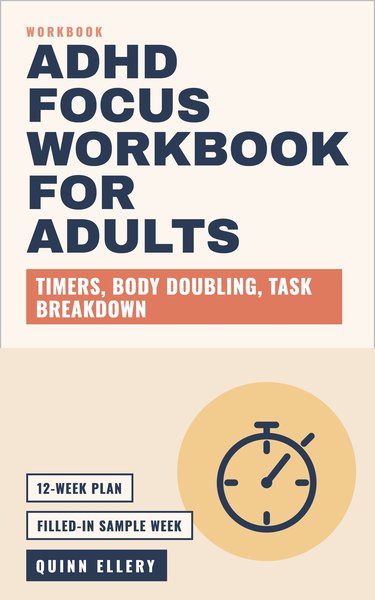
The companion workbook
ADHD Focus Workbook for Adults
by Quinn Ellery
A fill-in workbook built around the tools on this site: Pomodoro timer variants, body doubling, task breakdown into next physical actions, and time blindness tools that work with your brain, plus 12 weeks of undated focus planning pages.
Paperback on Amazon🔗 Complete Your ADHD Focus Mastery
Continue building your comprehensive ADHD productivity system: